
Sustainable and Immersive Storytelling
Sustainable and immersive event storytelling begins with a clear human narrative, then selects materials and media that can be justified for the actual project. Neither an environmental label nor an emerging technology makes a story credible by itself. A Florida buyer should define the audience, message, interaction, evidence, and lifecycle decisions before choosing scenic fabrication, digital layers, or generated content.
Quick answer: Write the story and guest action first. Evaluate every physical and digital element for relevance, accessibility, operational fit, substantiated environmental claims, and an end-of-use plan. Use immersive tools only when they strengthen comprehension or participation.
- Build one narrative spine across message, space, people, and media.
- Ask for project-specific evidence before making environmental claims.
- Plan reuse, recovery, storage, or disposal before materials are ordered.
What Is the Story the Guest Should Carry Forward?
Define the audience, central idea, proof, emotional tone, and next action in plain language. Then decide what the guest should notice first, what they should discover, what interaction supports the message, and how the experience resolves. The story should remain understandable without requiring every participant to use a device or read a long explanation.
Create a hierarchy rather than a pile of themes. One primary narrative can be supported by spatial cues, live hosts, objects, sound, light, video, interaction, or digital content. Each element needs a job. If it does not clarify the idea, help the guest act, or support operations, it may be unnecessary complexity.
How Should Environmental Claims Be Evaluated?
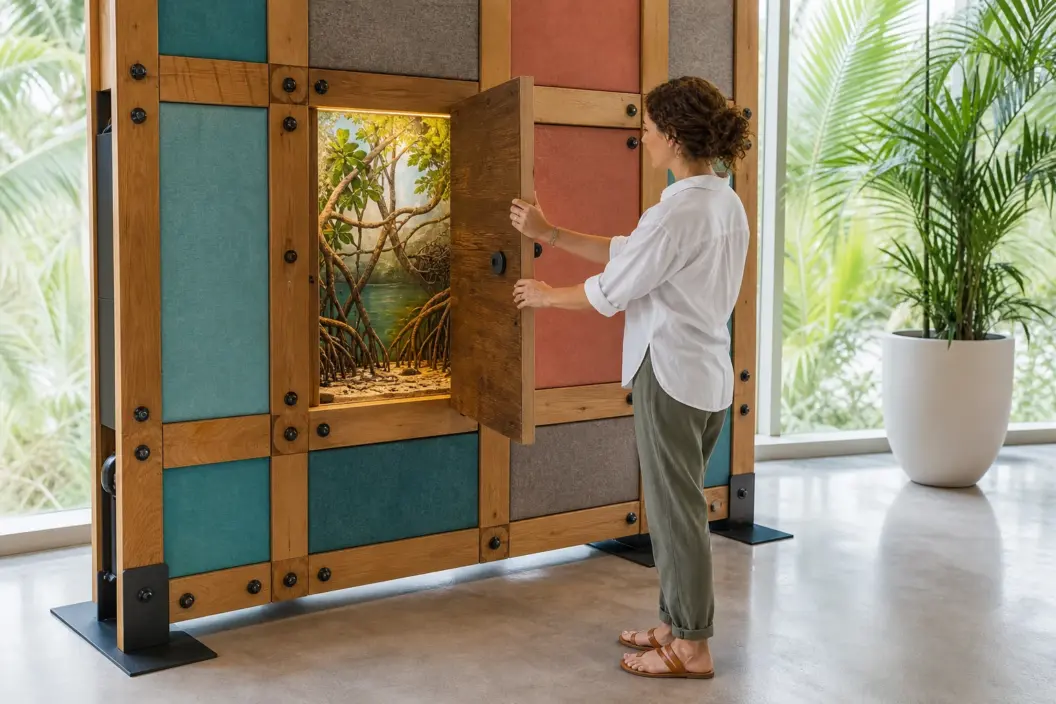
Replace broad words such as “green,” “eco-friendly,” or “zero waste” with specific project decisions and evidence. Ask what the material is, how much is required, where it comes from, how it performs, whether it can be reused, how it will be transported and stored, and what recovery or disposal route is actually available at the event location.
A reusable element is valuable only when the owner, next use, storage conditions, handling, repair plan, and transport burden are realistic. Recyclability depends on material composition and an accessible collection pathway, not merely a supplier description. The buyer and appropriate environmental, legal, venue, or waste specialists should review any public claim before it appears in event copy or signage.
When Does Immersive Technology Strengthen the Narrative?
Projection, spatial audio, augmented or virtual content, responsive lighting, interactive displays, and generated media can support a story when they reveal information, simulate a meaningful perspective, guide participation, or connect physical and digital chapters. Compare the proposed medium with a simpler display, live demonstration, physical object, or staff-led interaction before approving the added production burden.
Define content ownership, licenses, approvals, accessibility, privacy, technical support, power, connectivity, operating staff, and a fallback. Any AI-assisted copy or imagery should receive human review for factual accuracy, rights, brand fit, physical realism, people, weather, environment, and relevance. It should not imply a product, project, material, or capability that has not been verified.
What Changes for a Florida Event Build?
Florida sites may expose event elements to sun, heat, humidity, wind, rain, salt air, condensation, intensive air-conditioning transitions, or long transport distances. Review finish durability, glare, ventilation, moisture response, electrical protection, anchoring, cleaning, storage, and guest comfort with the venue and responsible technical parties. A material choice should fit both the story and the real environment.
Site rules also affect what can be installed, suspended, powered, attached, recovered, or removed. Confirm loading, labor, floor protection, waste streams, fire and life-safety review, working hours, and dismantle access before finalizing the system. Environmental intent does not override venue requirements, engineering, code, licensed-trade, or safety responsibilities.
Where Can THRILLFORGE Support the Storytelling Brief?
THRILLFORGE may fit when an approved story needs creative direction, event design, fabrication, production support, or coordination across the physical guest environment. The project brief should identify who validates environmental claims, supplies technical platforms, owns content rights, approves materials, and controls venue or professional decisions. Review the relevant Services after those boundaries are understood.
Bring the audience, narrative, venue, desired interaction, brand standards, material priorities, evidence available for proposed claims, technical partners, lifecycle plan, schedule, and budget parameters. THRILLFORGE can discuss a suitable physical or production role without asserting a particular engagement result or environmental outcome for a chosen material.
Frequently Asked Questions
- What makes event storytelling immersive?
Immersion comes from coherent attention and participation across space, people, content, and sensory cues. It does not require a headset, projection, or other particular technology.
- Can a reusable event build be called sustainable?
Reuse may support an environmental goal, but any claim should reflect the material, actual reuse plan, storage, transport, repair, end-of-use pathway, and suitable substantiation.
- Should AI-generated content be used in an event?
It may assist a bounded task when rights, privacy, factual accuracy, representation, realism, and brand approval are reviewed by accountable people. A conventional method may be more appropriate.
- What should be included in the first storytelling brief?
Include the audience, central message, proof, desired action, venue, program, physical and digital channels, accessibility needs, material priorities, claim evidence, lifecycle plan, approvals, and budget parameters.