
Wayfinding Signage Solutions in Florida for Events
Wayfinding signage for a Florida event should answer each guest’s next decision before anyone has to ask. A useful system connects arrival, check-in, program zones, amenities, sponsor destinations, exits, and accessible routes in one visual language. THRILLFORGE plans directional signage as part of the guest journey rather than as last-minute labels, helping the event feel composed from curb to exit.
Quick answer: Start with routes and decision points, then define sign hierarchy, wording, placement, mounting, and change control. The right wayfinding package is easy to scan, appropriate for the venue, and practical for the team installing and updating it.
- Map arrival, decision, destination, and return routes before designing signs.
- Give directions priority over sponsor or decorative messages.
- Validate sightlines, mounting, weather exposure, and venue restrictions on the actual site plan.
Where Does a Florida Event Need Wayfinding?
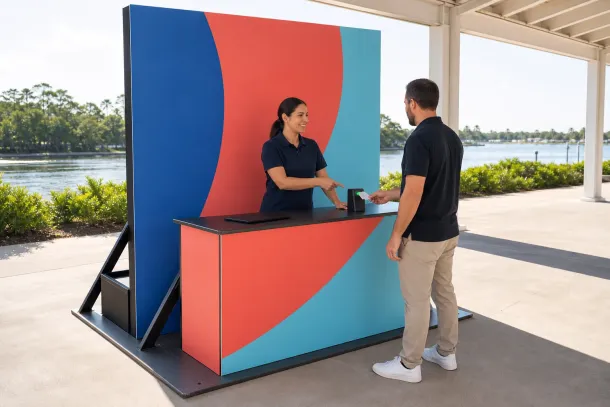
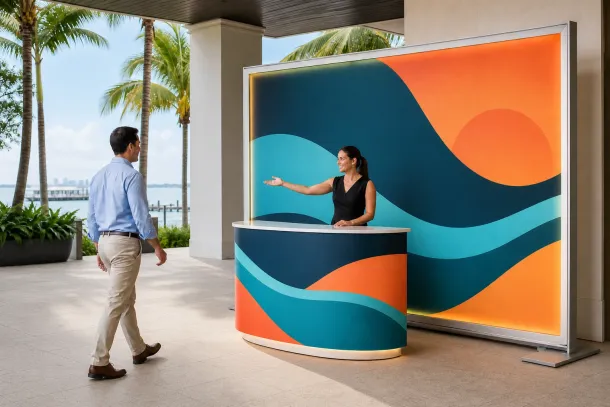
Begin where uncertainty begins: parking or drop-off, security, registration, path splits, elevators, restrooms, program rooms, hospitality areas, and the route back out. A resort event may need a clear transition from valet to ballroom. A convention program may need repeated confirmation across a long concourse. An outdoor activation may need fewer signs, but stronger visibility at greater distance.
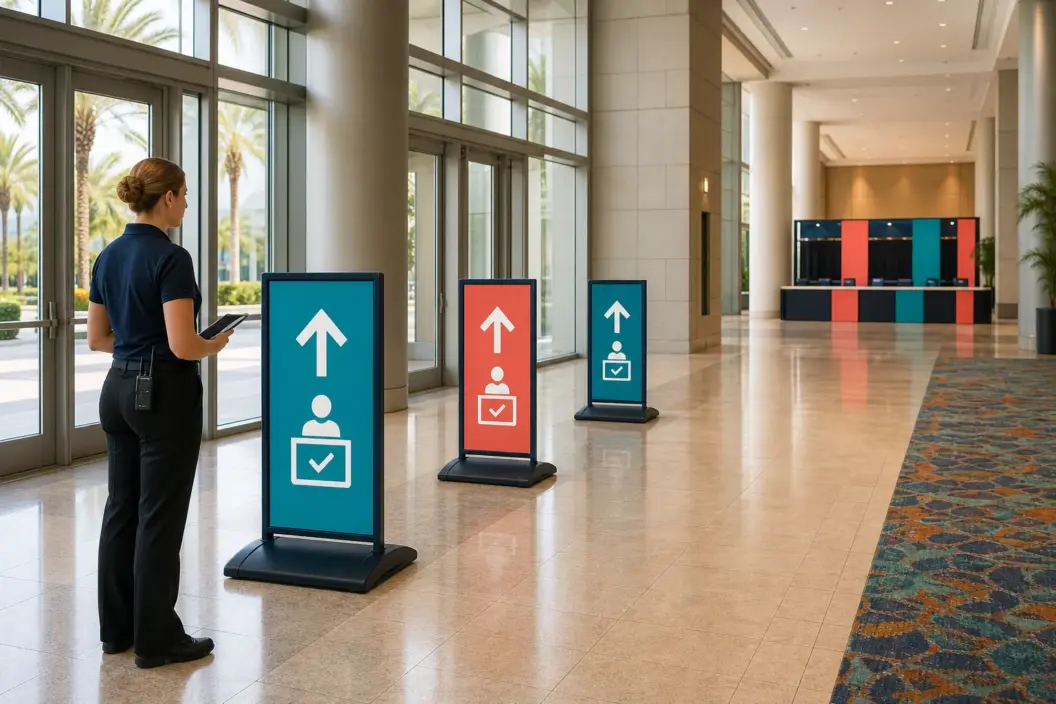
Each location should answer one immediate question. Arrival signs confirm that guests are in the right place. Decision signs distinguish routes. Destination signs confirm arrival. Reassurance signs help on long paths. Separating those jobs prevents a sign from becoming a crowded poster that guests cannot read while moving.
How Do You Build a Signage Plan That Works On Site?
A practical plan starts with the latest floor plan, guest categories, operating schedule, venue rules, and a list of destinations using the exact names guests will recognize. From there, create a sign schedule with an identifier, message, location, viewing direction, size, mounting method, and responsible approver for every unit.
Review the schedule with operations, registration, security, accessibility, and sponsor stakeholders before fabrication. Accessibility requirements and emergency or code signage should be confirmed with the venue and the appropriate qualified professionals; branded wayfinding should support those systems, never obscure or replace them.
Planning check: Walk the route as a first-time guest and record every point where a person must choose, pause, or turn. Those moments—not empty wall space—determine the sign count.
What Should Buyers Include in the Wayfinding Scope?
Define more than printed panels. A complete scope may cover freestanding pylons, door and room identifiers, registration markers, sponsor destinations, changeable schedule inserts, staff-only markers, installation hardware, placement maps, packing labels, and a controlled list of final messages. The mix depends on the venue and program, not on a fixed package.
Also decide who can change copy and when. Event names, room assignments, and sponsor approvals can move late. Modular message areas or replaceable graphics can reduce disruption, while a final sign register gives the install crew one source of truth. That discipline protects both guest clarity and brand presentation.
How Do Florida Conditions Change the Sign System?
Outdoor Florida placements require attention to sun, rain, wind exposure, wet ground, landscape irrigation, and reflective glare. Indoor resort and convention settings bring different constraints: protected finishes, narrow service access, crowded sightlines, and strict rules for attaching anything to floors or walls. The mounting method must match the exact site and venue approval.
Contrast and legibility matter in bright daylight as much as in dim hospitality spaces. Test representative graphics at viewing distance and under expected lighting. For exposed locations, define a weather response with event operations, including who may relocate or remove units if conditions change.
When Is THRILLFORGE the Right Fit?
THRILLFORGE is a strong fit when directional signage must feel integrated with the event’s branded environment rather than purchased as isolated pieces. The useful starting point is a working site plan, the guest journey, brand standards, venue restrictions, and a clear owner for copy approvals.
A project conversation can align design, fabrication, and production planning around the actual routes guests will use. That makes it easier to identify what should be custom, what can remain simple, and where disciplined placement will create more value than additional decoration.
Frequently Asked Questions
- What information is needed before wayfinding design begins?
Provide the current site or floor plan, entrances, guest categories, program zones, destination names, venue rules, brand files, sponsor requirements, and the person authorized to approve final copy.
- How many directional signs does an event need?
There is no reliable universal count. The number follows the routes, decision points, viewing distances, and complexity of the venue. A route walk and sign schedule provide a defensible answer.
- Can one system work indoors and outdoors?
The visual language can remain consistent, but bases, materials, finishes, attachment methods, and weather procedures should be selected for each placement.
- Can sponsor or room names be changed late?
They can be easier to change when the system uses planned insert areas or replaceable graphics. A firm approval cutoff and one controlled message list still reduce errors.
THRILLFORGE — FORGING LEGENDARY EXPERIENCES.