
Trade Show Booth Design in Orlando and Miami
A Florida trade show booth should communicate the offer from the aisle and give the sales team a clear path from greeting to follow-up. Its design must also fit the exact show footprint, exhibitor rules, utilities, freight process, product needs, staffing, and reuse plan. THRILLFORGE treats the booth as a convention-specific business environment, not simply a branded backdrop.
Quick answer: Use the official show information to lock the footprint and constraints, then design aisle recognition, product or demo zones, staff positions, conversation space, lead capture, storage, utilities, packing, and graphic hierarchy around the sales plan.
- Make the company and offer understandable from the expected aisle approach.
- Design around the sales team, product, demonstrations, and follow-up process.
- Review the specific exhibitor manual before drawings or production are released.
What Must a Visitor Understand from the Aisle?
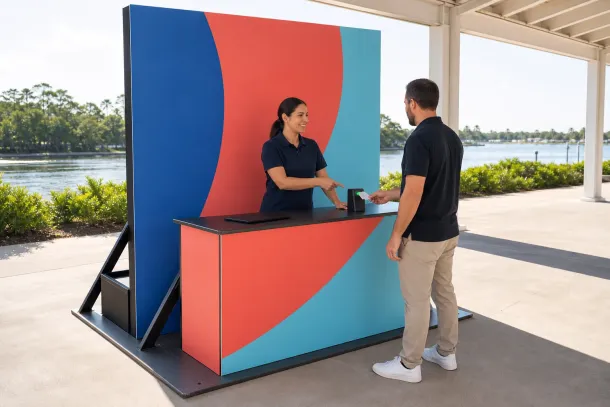
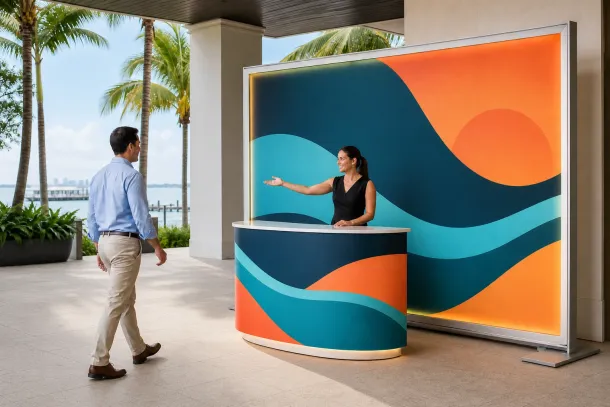
A passing attendee should be able to identify the exhibitor, understand the category or offer, and see a reason to stop without reading a paragraph. That requires a hierarchy built for distance and movement. The main message, product, or demonstration should not be hidden behind a reception counter or a cluster of staff.
Approach angles matter. A corner booth, peninsula, island, and inline booth expose different views and open sides. Place recognition and invitation where the intended visitor first encounters the space, then use secondary content inside for proof, detail, and conversation.
What Should Be Locked Before Booth Design?
Confirm the show, venue, footprint, orientation, open sides, surrounding exhibitors where known, height and setback rules, approved floor plan, utilities, rigging or overhead restrictions, fire-safety requirements, service deadlines, freight process, installation responsibility, product dimensions, devices, staffing, and accessibility needs.
Orlando, Miami, Broward, and Tampa events may use different organizers, venues, labor arrangements, and service providers. The current exhibitor manual and organizer instructions are the source of truth. Any regulated or venue-controlled work should be assigned to the appropriate approved and qualified provider.
Planning check: Put the exhibitor manual, floor plan, service orders, product list, and content approvals on one release checklist. A beautiful booth can still fail operationally if one dependency is missing.
How Should the Booth Support the Sales Team?
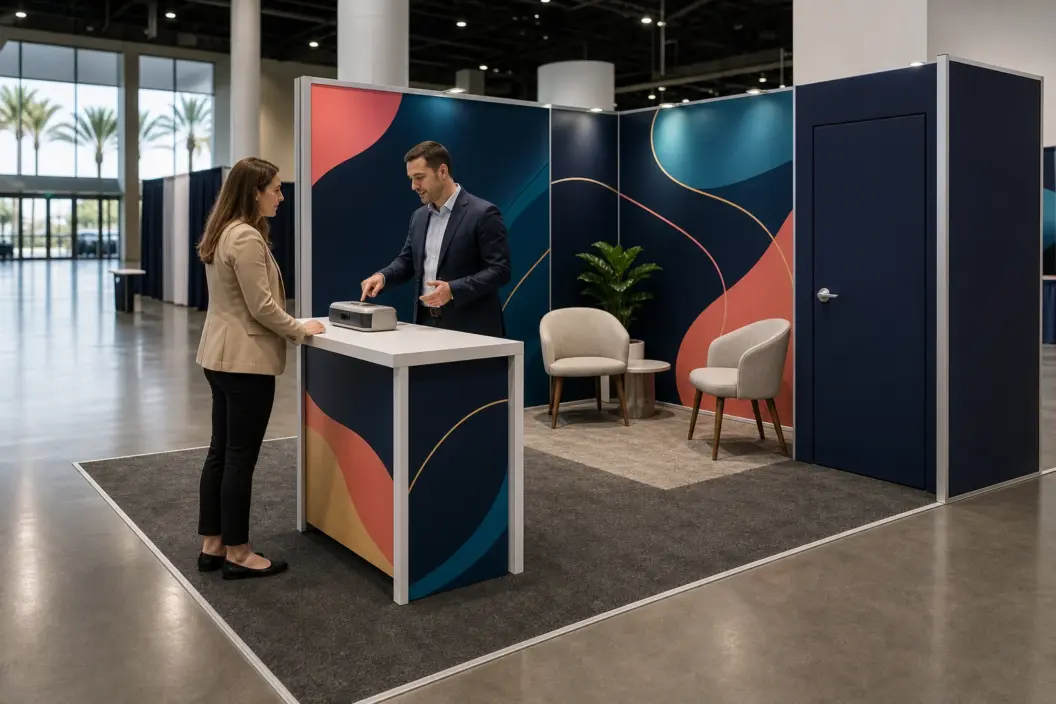
Map the real conversation: greeting, qualification, product explanation or demo, deeper discussion, lead capture, and next step. Decide which stages occur standing, at a counter, beside a product, on a screen, or in a quieter zone. Staff should be able to enter and leave a conversation without blocking the aisle or other visitors.
Storage, charging, collateral, personal items, replacement stock, and waste need assigned places. Screens need prepared content and manageable glare. Demos need power, safe access, reset time, and a backup if equipment fails. The booth should reduce improvisation so the team can focus on qualified conversations.
Why Must the Booth Be Planned for the Specific Florida Show?
A booth that fits one hall does not automatically fit another. Ceiling conditions, columns, service locations, floor loading, approved materials, freight routes, dock schedules, installation windows, neighboring sightlines, and organizer policies can change. Recheck all of them for every event.
The audience and show rhythm also matter. A high-volume industry expo may reward open demonstrations and fast qualification. A specialized business event may need product detail and longer conversations. Location keywords should never substitute for an actual show brief.
Is the Booth Ready for More Than One Show?
Reuse begins with the expected event calendar. Plan modular dimensions, alternate layouts, replaceable graphics, durable touchpoints, hardware, assembly, crates, inventory labels, repair access, and storage. Keep a record of components and condition after each event so the next design starts from facts.
THRILLFORGE can help align booth design and fabrication with the intended sales use and travel plan. Bring the show documents, footprint, product needs, team workflow, brand files, existing assets, and future event assumptions to define a scope that is appropriately custom.
Frequently Asked Questions
- What is the difference between a trade show booth and a general event booth?
A trade show booth is designed around a specific exhibitor footprint, organizer rules, show services, neighboring aisles, freight process, and a concentrated sales schedule.
- When should the exhibitor manual be reviewed?
As soon as it is available and again before design release. The team should track revisions and confirm uncertain requirements directly with the organizer or venue.
- How much space should be given to lead conversations?
Base it on staffing, expected conversation length, product or demo needs, and the value of privacy. Do not sacrifice the entrance or essential operations for seating that may go unused.
- Can one booth be used in both Orlando and Miami?
Components may travel, but each show requires confirmation of footprint, rules, services, access, graphics, audience, and installation responsibilities.
THRILLFORGE — FORGING LEGENDARY EXPERIENCES.