
Tech-Infused Activations: The Future of Fan Engagement
Technology earns its place in a fan activation when it makes the interaction clearer, more personal, more useful, or easier to share. It should not be a decorative screen added after the guest journey is designed. For buyers planning fan engagement activations in Florida, THRILLFORGE can help develop the physical environment around the chosen interaction, specialist technology, staffing, power, data, queue, reward, and fallback plan.
Quick answer: Choose the fan behavior and reward first, then select technology that supports them. The fabrication should hold devices securely, control cables and glare, give staff service access, manage the queue, and keep the experience understandable if a technical component becomes unavailable.
- Define what the fan does, receives, and understands before selecting hardware.
- Coordinate power, connectivity, device access, data ownership, and staffing early.
- Design a visible, approved fallback that protects the guest experience.
Which Fan Interaction Is Worth Building?
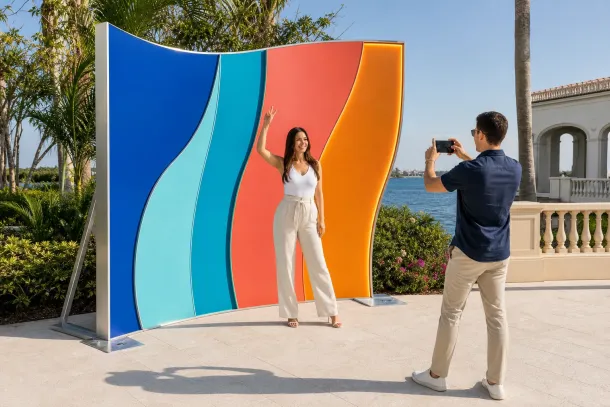
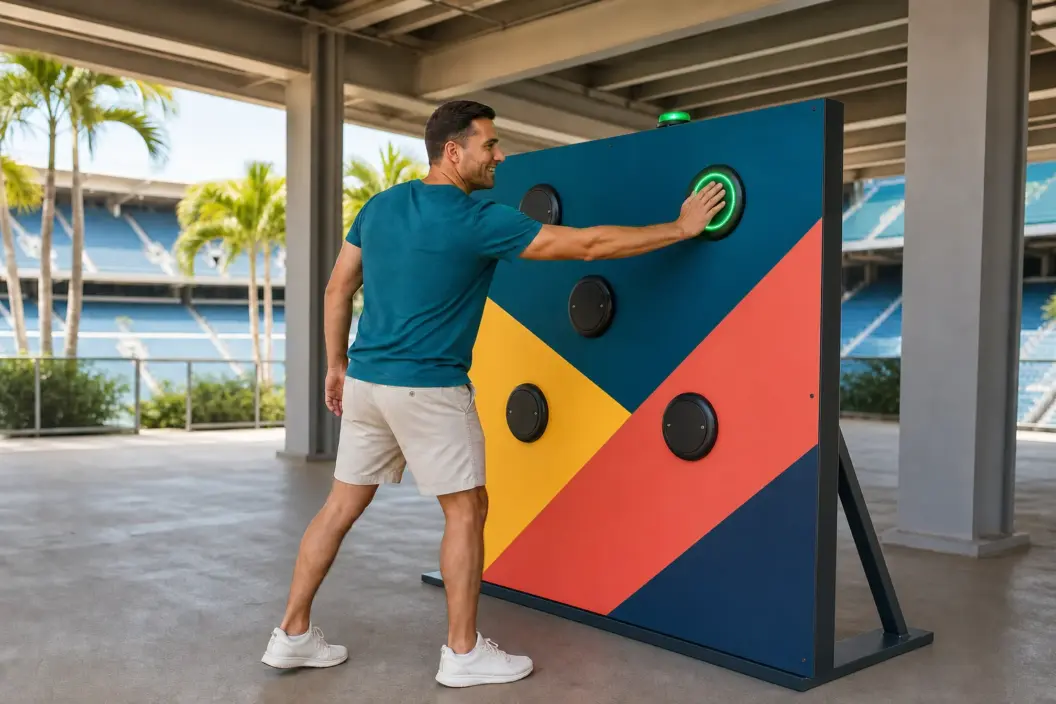
Start with a simple sentence: the fan does this and receives that. The action might involve a timed challenge, camera-based keepsake, product personalization, content selection, trivia, an approved sign-up, or another interaction relevant to the sponsor. The reward can be digital, physical, informational, or social, but it should be obvious before the fan joins the line.
Test whether technology improves the action. If a host and a physical game communicate the idea better, a screen may add friction. If a camera, sensor, printer, or device creates a result the guest values, the physical build should make that technology credible and easy to use rather than bury it in scenery.
What Must the Technical and Physical Teams Coordinate?
Identify the hardware provider, software or platform owner, network approach, power requirements, device dimensions, heat output, service clearances, cable routes, restart procedure, content owner, and onsite support responsibility. Fabrication decisions depend on those details. A kiosk cannot be sized from a screenshot or a generic monitor specification.
The structure may need ventilated device bays, lockable access, protected readers or printers, camera openings, screen shade, accessible controls, staff-side service doors, and a place for consumables. The relevant vendors and venue should approve their interfaces and operating requirements before the physical components are finalized.
Integration note: Put the actual device, cables, reader, printer, and service movement into a scaled mockup. A nominal screen size does not reveal connector depth or staff access.
How Do You Plan Queue, Throughput, and Staffing?
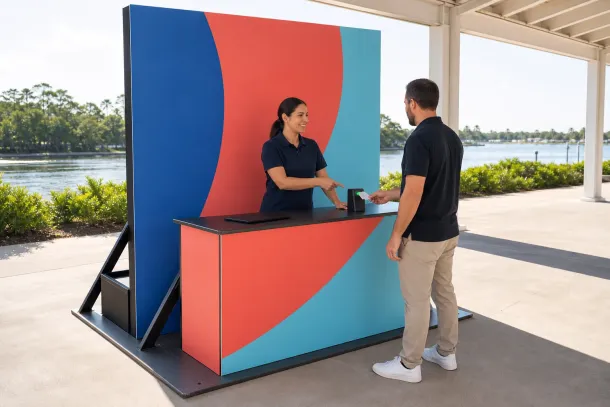
Time the full interaction from invitation to exit, including explanation, device use, retry, reward delivery, and reset. Then decide how many stations the footprint and staff can support. Queue signage should state what is happening and what guests need ready, while the host position allows assistance without reaching across other participants.
Florida outdoor locations may add screen glare, heat, rain response, noise, and guest-comfort needs. Provide shade or orientation where appropriate, protect equipment according to the responsible provider’s requirements, and keep lines clear of emergency routes and the venue’s general circulation paths.
What Happens When Technology Is Unavailable?
Agree on the fallback before opening. Depending on the program, the approved response may pause the experience, shift to a host-led interaction, continue without data capture, provide a different reward, or direct guests to another time or location. The client and technology operator should approve the language and any data-related process.
The physical build should make recovery possible: service access remains clear, staff can see equipment status, failed devices can be isolated, consumables can be replaced, and the guest-facing area does not expose loose cables or an improvised repair scene.
How Can THRILLFORGE Support a Tech-Infused Activation?
THRILLFORGE can help design and fabricate the branded physical environment around client-selected interaction and technology requirements, coordinate device placement with the responsible providers, and plan guest, queue, staff, storage, and service zones for the supplied Florida site. Specialist vendors remain responsible for their hardware, software, network, and data systems.
Bring the fan action, reward, hardware list, provider contacts, device drawings, power and connectivity needs, data workflow, throughput assumption, staffing, site plan, event hours, weather exposure, brand files, budget range, and fallback decision. That package turns “make it interactive” into a scope the whole team can review.
Tech-Infused Fan Activation FAQs
- Who supplies the interactive technology?
The project should name the responsible hardware, software, platform, network, and support providers. THRILLFORGE can plan the physical environment around their confirmed requirements.
- Does every activation need guest data?
No. The experience can deliver entertainment, education, personalization, or a keepsake without collecting personal information. Any collection should follow the client’s approved process.
- How is outdoor screen glare handled?
Orientation, shade, display selection, brightness, graphic contrast, and operating time all matter. The display provider and site conditions should inform the solution.
- What should a technical fallback include?
Define who makes the call, what staff tell guests, whether the interaction pauses or changes, how rewards are handled, and how the responsible provider services the equipment.
THRILLFORGE — FORGING LEGENDARY EXPERIENCES.