
Why Sensory Design Makes Your Brand Stand Out
Sensory design gives an event a deliberate physical character through material, light, sound, scent, temperature, movement, and touch. The value comes from choosing cues that fit the brand and guest—not from activating every sense at once. For teams exploring sensory design in Florida, THRILLFORGE can help shape the spatial and fabricated elements around a clear emotional direction, the selected venue, guest comfort, accessibility, and operations.
Quick answer: Choose one primary sensory idea and one supporting cue. Test them in the real environment, document guest and venue considerations, give staff control over intensity, and connect the experience to a specific product, hospitality, or brand story.
- Write the desired guest feeling before choosing materials or effects.
- Use restraint and provide a comfortable path for guests who prefer less stimulation.
- Test sensory cues under the venue’s actual light, noise, heat, and airflow.
What Should Sensory Design Communicate?
Begin with the brand or product idea in plain language: calm precision, bright discovery, coastal freshness, crafted warmth, energetic play, or another specific direction. Then decide which physical cues can express it honestly. A tactile material and controlled light may carry the story better than an added scent, soundtrack, and animated screen competing for attention.
Sensory choices should serve the occasion. A guided fragrance discovery, food or beverage tasting, premium lounge, product launch, retail pop-up, and fan activation need different levels of instruction, participation, and environmental control. Define what guests are invited to touch, smell, hear, or handle and how staff reset the moment.
How Do Materials, Light, and Sound Work Together?
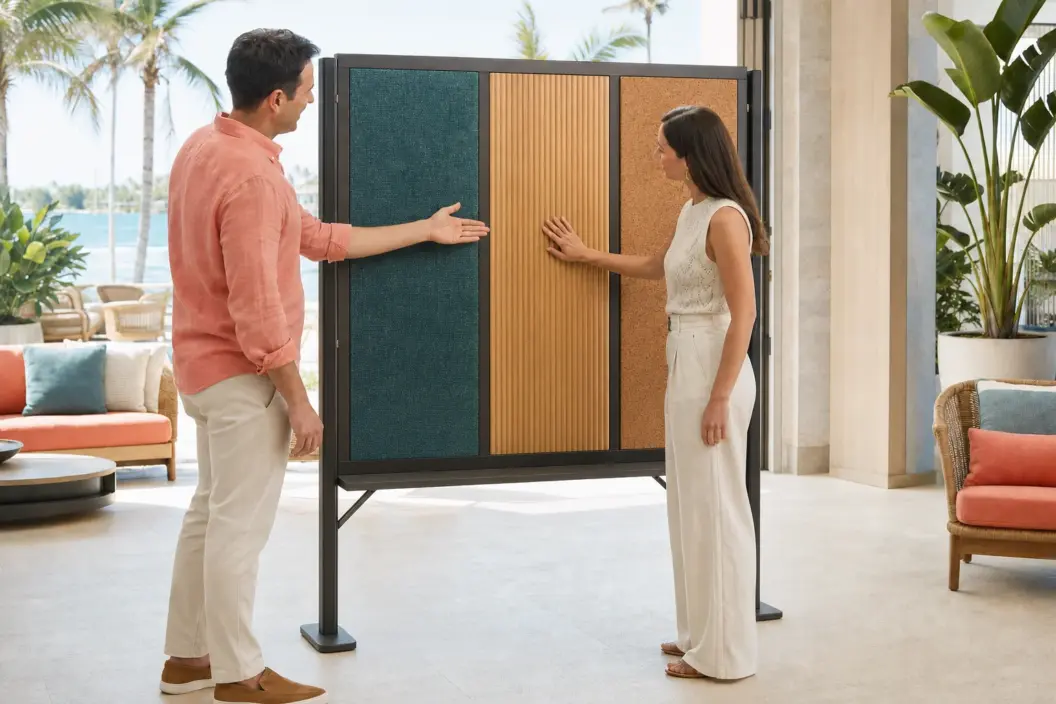
Build a sensory hierarchy. Material texture can make a counter or sample ritual feel more considered. Light can focus attention and reveal color or finish. Sound can establish a boundary or support pacing when the venue allows it. Each layer should leave room for conversation, wayfinding, and the host’s instructions.
Test samples together rather than approving them separately. A glossy surface may reflect event lighting, a soft textile may absorb sound differently than expected, and a color can shift in open shade. For Florida outdoor or semi-open spaces, heat, humidity, airflow, sun, and surrounding noise may change the sensory effect considerably.
Sensory note: Prototype the guest ritual at full reach and real duration. A beautiful material sample does not prove that the complete interaction is clear, comfortable, or easy to reset.
What Requires Extra Care With Scent, Taste, and Touch?
Scent should be intentional, limited, and controllable. Discuss ventilation, neighboring programs, staff exposure, guest sensitivities, labeling, and an unscented route with the venue and appropriate product or safety specialists. Do not use an ambient scent merely because the concept is labeled multisensory.
Taste and product sampling require the selected venue, caterer, product owner, and other responsible providers to define handling, service, utilities, storage, cleaning, waste, and guest information. Touch-based moments need durable surfaces, reset procedures, accessible reach, and a plan for guests who choose not to participate.
How Can a Buyer Evaluate the Experience?
Decide what can be observed without inventing a performance claim. The team might record completed guided interactions, product trials, voluntary feedback, host questions, approved opt-ins, or sales activity captured in the client’s own systems. Staff notes can reveal where guests hesitate or which instruction needs improvement.
Compare those observations with the intended journey: Did guests recognize the invitation? Could hosts explain it? Was the cue noticeable at the intended intensity? Could staff reset it? Did the environment remain comfortable? The answers guide refinement even when the event is not designed as a formal research study.
How Can THRILLFORGE Support a Sensory Environment?
THRILLFORGE can help translate the sensory direction into spatial layout, material and finish selections, lighting-ready scenic elements, counters, displays, and guest-interaction details based on the supplied site and operating brief. Product, scent, food, beverage, sound, lighting, and other specialist providers should define and approve their respective systems.
Bring the desired feeling, product or story, guest action, venue, event hours, sensory cues under consideration, accessibility and comfort needs, specialist contacts, staffing, maintenance plan, brand assets, budget range, and evaluation method. That brief helps the team create a focused environment instead of a collection of effects.
Sensory Event Design FAQs
- Does sensory design require scent?
No. Material, light, sound, temperature, movement, touch, and spatial rhythm can create a sensory identity without adding fragrance.
- How many sensory cues should an activation use?
There is no required count. One clear cue with a supporting layer is often easier to understand and operate than several unrelated effects.
- Who reviews scent or sampling requirements?
The venue and appropriate product, catering, safety, legal, accessibility, or other specialist reviewers should define the requirements for the selected program.
- Can sensory elements travel to more than one venue?
Some physical components can be designed for reuse, but airflow, acoustics, lighting, temperature, utilities, and neighboring activities should be reassessed at each site.
THRILLFORGE — FORGING LEGENDARY EXPERIENCES.