
Mobile Brand Tours in Florida with Custom Builds
A mobile campaign is not one event repeated on a calendar. It is a transport, setup, staffing, guest-flow, and maintenance system that has to work at every stop. For teams planning mobile brand tours in Florida, THRILLFORGE can help turn the campaign brief into a repeatable physical platform suited to the route, stop types, audience interaction, and conditions the team expects to encounter.
Quick answer: Plan the route and operating model before choosing a trailer, vehicle, or modular display. The right mobile build fits access at each stop, protects equipment in transit, gives crews a clear deployment sequence, and supports the same guest promise from city to city.
- Group tour stops by footprint, access, audience, and operating hours.
- Design packing, deployment, reset, and repair into the physical kit.
- Separate the guest experience from vehicle and venue logistics.
Which Mobile Platform Fits the Campaign?
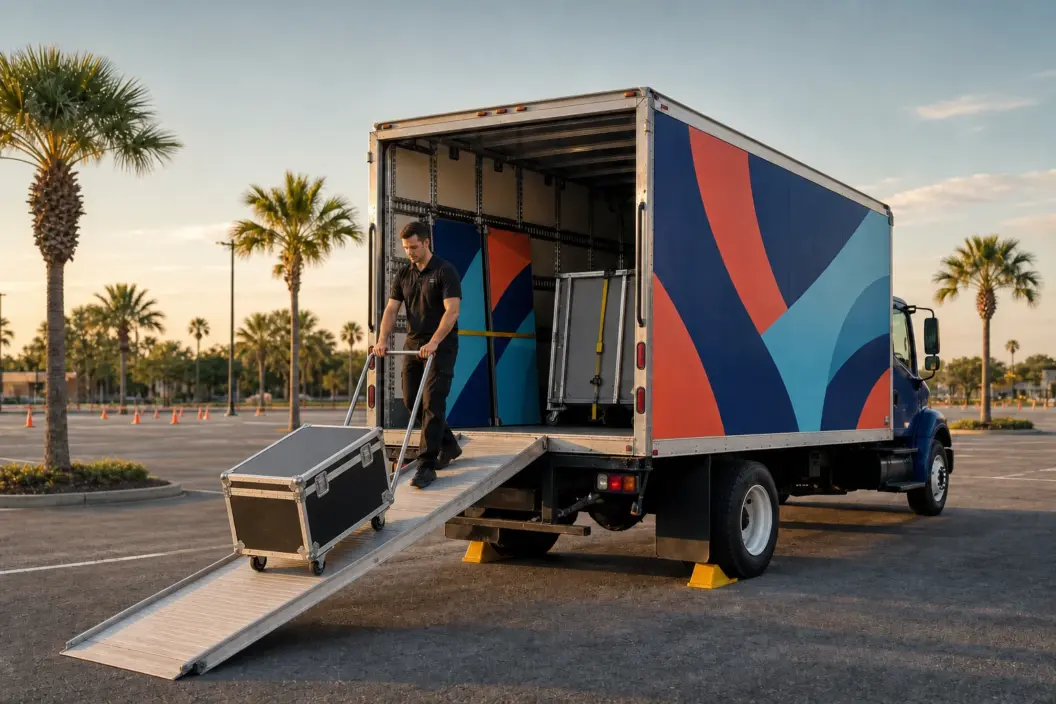
A branded vehicle, walk-up trailer, towable display, cargo-based kit, and road-cased modular footprint solve different problems. A vehicle-led platform can create presence and contain storage, but it also introduces parking, access, leveling, and service considerations. A modular kit can adapt to more footprints, while asking the crew to handle more pieces at each stop.
The choice should follow the route. A campus quad, beachfront festival, retail parking lot, convention exterior, and stadium fan zone may not accept the same configuration. Build a stop matrix showing usable area, surface, access time, vehicle rules, power, operating window, staffing, and weather exposure before committing to one format.
What Makes a Touring Build Repeatable?
Repeatability comes from sequence and labeling as much as fabrication. Components need known pack locations, protective cases or restraints, clear connection points, replaceable high-wear surfaces, and an install order the touring crew can follow. The team should know what opens first, what requires venue coordination, and what stays accessible during operation.
Plan the reset between stops too. Sampling equipment, waste, damp materials, graphics, guest-contact surfaces, and small hardware all need a routine. When the campaign crosses Miami, Orlando, Tampa, Jacksonville, or smaller Florida markets, the physical system should remain understandable even when local labor, parking geometry, or event tempo changes.
Route-planning note: Test the longest setup task and the most constrained stop on paper before optimizing the easy locations. The difficult stop often reveals the real platform requirement.
How Should Guests Experience Each Stop?
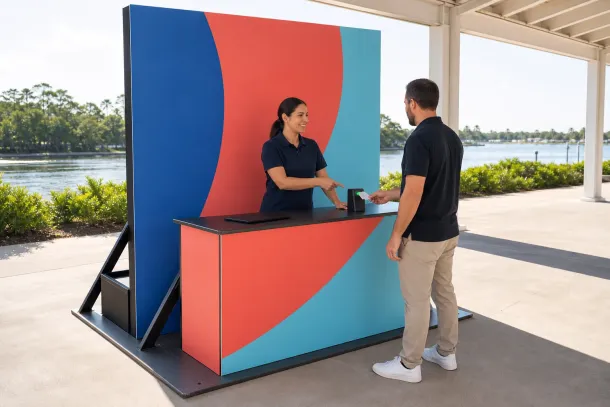
Keep the promise consistent even when the footprint changes. A guest should quickly see what the brand is offering, where the interaction begins, whether a line exists, and what they receive at the end. The host zone, display, sample handoff, content moment, or sign-up point should not depend on the vehicle alone if some stops require a detached layout.
Touring campaigns also need an honest throughput model. Estimate how long one interaction takes, how many staff positions are active, where waiting guests stand, and how the experience closes. Those inputs guide counter length, storage, shade, signage, and the number of simultaneous interaction points without promising a result the site cannot support.
How Do Florida Conditions Affect the Route?
Florida routing brings seasonal heat, sudden rain, high sun, salt exposure near the coast, and busy public sites. The appropriate response depends on the stop: shade and ventilation for guest comfort, non-glare communication surfaces, drainage awareness, protected storage, or an indoor fallback. The venue and relevant specialists determine permitted placement, electrical arrangements, and any structural requirements.
Add weather decisions to the run of show rather than leaving them as a general disclaimer. Define who watches conditions, what can be secured or moved, what cannot operate when wet, how guests will be redirected, and which materials need inspection before the next stop.
Where Does THRILLFORGE Fit in the Tour Team?
THRILLFORGE can help develop the physical experience, translate the campaign into buildable components, and coordinate fabrication planning around the supplied vehicle, route, venue, and operating requirements. Where a program uses specialist vehicles, software, power, transportation, or local site services, those parties should be identified early so their constraints are reflected in the build.
Bring a route outline, stop types, target footprint, interaction, campaign dates, brand assets, staffing assumptions, transport plan, budget range, and reuse horizon to the first conversation. That brief makes it possible to compare platforms on operational fit instead of visual novelty alone.
Mobile Brand Tour FAQs
- Does a mobile tour require a custom vehicle?
No. Depending on the route and interaction, a trailer, modular kit, carts, road-cased displays, or a combination may be more practical than a purpose-built vehicle.
- How early should the stop list be shared?
Share confirmed and likely stop types during concept planning. Exact sites can evolve, but access, footprint, weather exposure, and operating-hour assumptions affect the platform choice.
- What should travel inside the build?
Account for guest-facing equipment, graphics, consumables, cleaning supplies, tools, replacement parts, staff items, waste, and any materials needed to reset the experience.
- Can the footprint change from one stop to another?
Yes, if the system is designed with defined configurations and the crew knows which components, utilities, and guest-flow rules apply to each version.
THRILLFORGE — FORGING LEGENDARY EXPERIENCES.