
Event Branding Solutions in Florida That Convert
Event branding turns a campaign identity into a coherent physical guest experience. It connects arrival, stage, hospitality, sponsor recognition, navigation, content, and photo moments so the event feels like one brand rather than a collection of printed pieces. THRILLFORGE helps translate the visual system into buildable applications suited to the venue and Florida setting.
Quick answer: Establish the message and sponsor hierarchy first, then assign each brand element a job along the guest journey. Use scale, materials, lighting, and repetition to create recognition without covering every surface with logos.
- Create one hierarchy for host, campaign, sponsors, and required messages.
- Translate flat brand guidelines into material, scale, depth, and light.
- Place branding where guests arrive, decide, gather, interact, and photograph.
What Does Event Branding Actually Include?
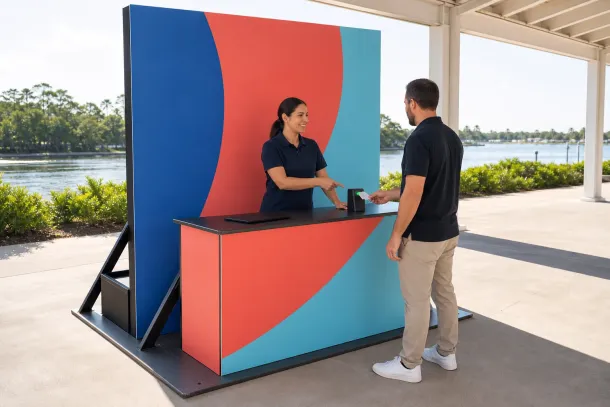
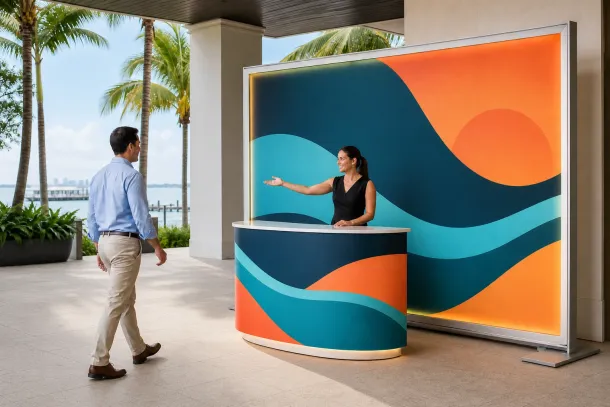
Event branding can include an entry statement, registration environment, stage surfaces, directional language, sponsor recognition, scenic features, service points, product displays, menus, credentials, digital-screen frames, and photographic backgrounds. The right mix follows the program; not every event needs every application.
The system should make the host recognizable while leaving room for hospitality, speakers, products, and the venue itself. A disciplined brand plan identifies a small number of high-value moments and supports them with consistent secondary details instead of repeating the same oversized logo everywhere.
How Do You Turn Brand Guidelines into a Physical Environment?
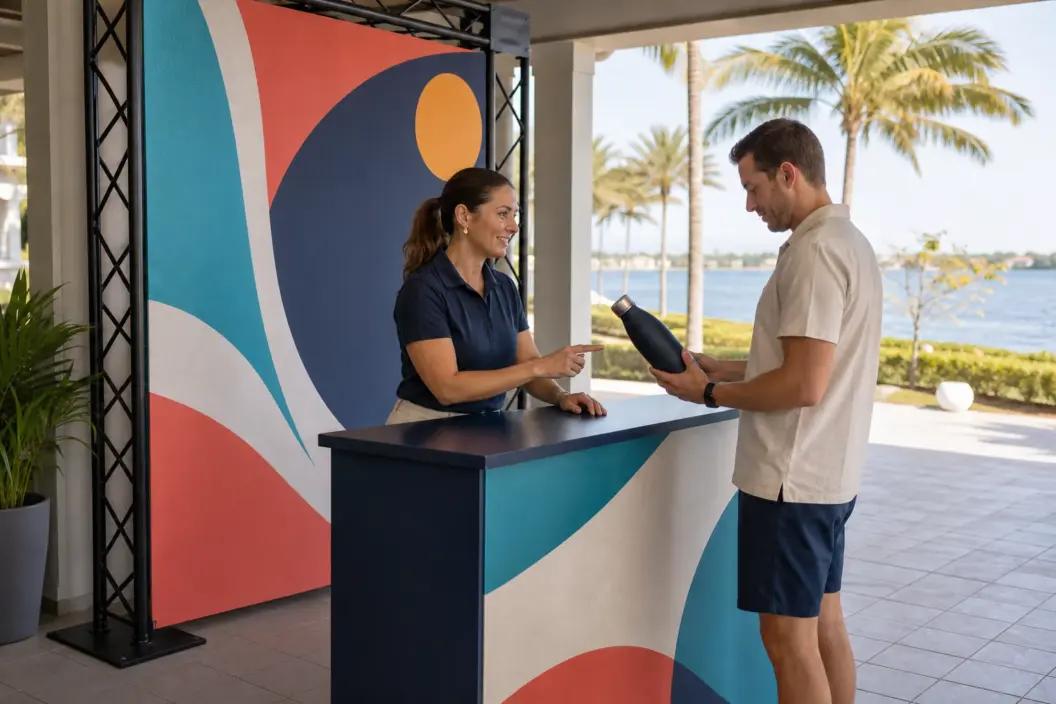
Begin with approved source files, color specifications, typefaces, campaign rules, prohibited uses, imagery, tone, and sponsor obligations. Then test how those rules behave in three dimensions. A color may shift under venue lighting; a thin logo detail may not fabricate cleanly at a certain scale; a digital composition may need more breathing room on a scenic wall.
Material decisions should reinforce the brand character. A refined hospitality identity may call for controlled texture and restrained illumination. A consumer launch may support bolder color, motion, or graphic scale. Mockups should show realistic sightlines and adjacent event elements so approvals reflect the complete environment, not an isolated panel.
Planning check: Review the brand system in a wide arrival view, a conversational view, and a phone-camera crop. Each distance reveals a different hierarchy problem.
Where Should Branding Appear Along the Guest Journey?
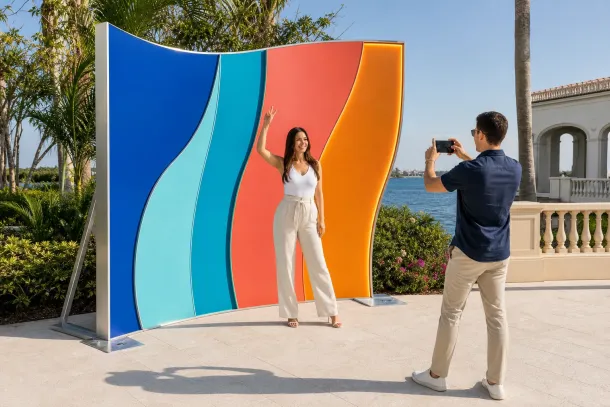
Arrival should confirm the event and set the tone. Navigation should remain readable. Program areas should support content rather than compete with it. Hospitality areas can use quieter material cues. Photo moments need a composition that identifies the brand without placing critical graphics behind faces or furniture.
Sponsor placement deserves its own map and approval path. Define tiers, relative scale, exclusivity, rotation where digital, and any required separation from competitors. That protects relationships and keeps late logo requests from weakening the host brand or disrupting finished fabrication.
How Should the System Adapt to Florida Venues?
Florida programs move between convention halls, hotel ballrooms, resort terraces, waterfront properties, and open-air sponsor environments. Indoor applications may prioritize protected finishes, service access, and venue attachment rules. Outdoor applications add sun, rain, wind exposure, glare, and the need for an agreed weather response.
The visual identity can stay consistent while construction and placement adapt. Confirm surfaces, dimensions, lighting, power, access, and venue restrictions before approving production files. When indoor and outdoor zones share one event, treat them as related conditions—not identical installations.
What Can THRILLFORGE Help Bring Together?
THRILLFORGE is best suited to event branding that crosses creative direction, physical fabrication, and production planning. A useful engagement starts with the guest journey, current brand standards, sponsor matrix, venue information, content owners, and the decisions that are already fixed.
From there, the scope can separate high-impact custom moments from simpler supporting graphics and identify where reuse is realistic. The objective is not more branded material; it is a clearer system that feels credible in person and coherent in the images guests and stakeholders will see afterward.
Frequently Asked Questions
- Which brand files are needed for an event environment?
Provide vector logos, color and typography standards, campaign artwork, imagery rules, prohibited uses, sponsor files, required legal copy, and named approvers.
- How do we keep event branding from feeling excessive?
Assign each placement a purpose, concentrate impact at key guest moments, and use material, color, and lighting cues where another logo would add clutter.
- How should sponsor logos be handled?
Create an approved hierarchy with tiers, relative scale, locations, exclusivity rules, and deadlines. Keep one controlled sponsor matrix throughout design and production.
- Can event branding components be reused?
Some frames, counters, scenic forms, and neutral components can be planned for reuse with replaceable graphics. Reuse depends on storage, transport, future footprints, and campaign changes.
THRILLFORGE — FORGING LEGENDARY EXPERIENCES.