
Stadium Environmental Graphics and the Fan Experience
Stadium environmental graphics shape how a venue reads as a connected place. They can identify districts, strengthen arrival, frame sponsor destinations, animate long concourses, and help fans recognize where they are without behaving like a collection of temporary signs. THRILLFORGE can help buyers develop stadium environmental graphics in Florida around architecture, circulation, viewing distance, material life, installation access, and the venue’s approval process.
Quick answer: Start with zones and architecture, not isolated wall artwork. Define what each area should communicate, survey the actual surfaces and sightlines, coordinate the graphic hierarchy with existing venue information, and select a material and mounting approach for the intended duration.
- Create a venue-wide hierarchy for identity, destination, story, and sponsor content.
- Survey every surface, obstruction, edge, light source, and viewing direction.
- Match graphic life span and maintenance access to the real program.
What Are Stadium Environmental Graphics?
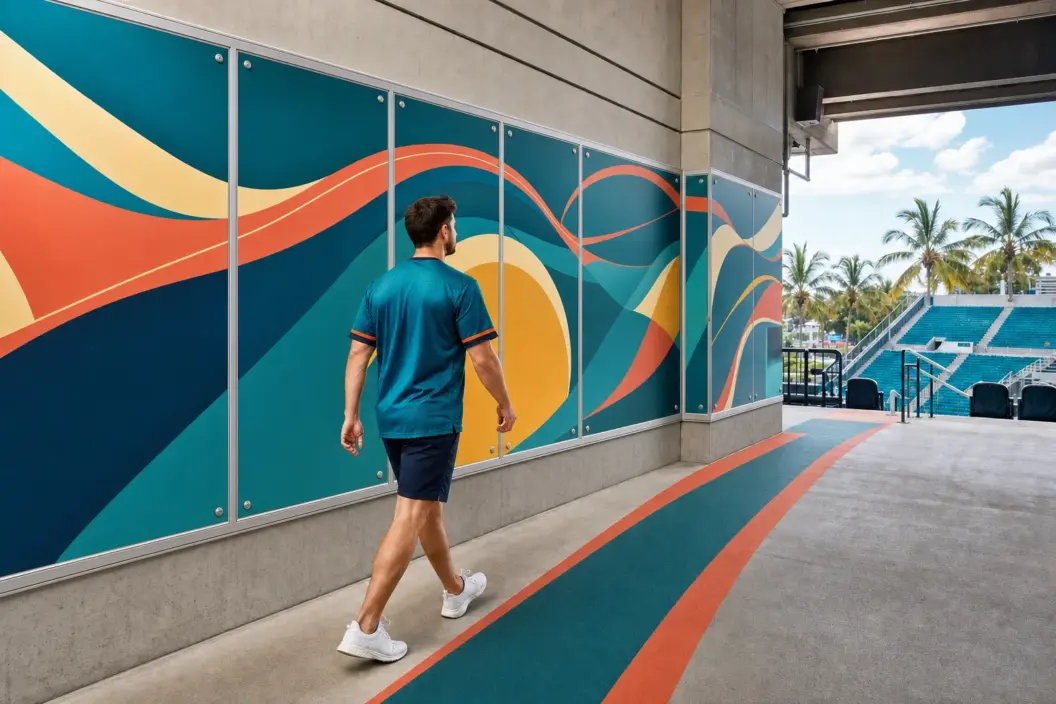
Environmental graphics are visual elements integrated with the built setting: dimensional identifiers, wall and column treatments, portals, district markers, donor or history displays, sponsor destinations, large-format patterns, and other surfaces that shape the character of a place. They may support orientation, but they are broader than a directional sign plan.
Buyers should define whether the program is event-specific, seasonal, semi-permanent, or intended for longer service. Duration affects substrate, finish, mounting, replacement, access, and the level of site documentation required before production.
How Should a Venue Be Divided Into Graphic Zones?
Break the fan journey into districts such as exterior arrival, gate approach, main concourse, vertical circulation, premium areas, sponsor zones, merchandise, concessions, seating transitions, and exit. Assign a communication role and visual intensity to each zone. A landmark at arrival may be bold, while a premium corridor may need quieter materials and closer detail.
Existing architecture should drive the composition. Structural bays, doors, rails, life-safety information, concessions, screens, utilities, and maintenance access cannot be treated as afterthoughts. A coordinated elevation set helps the team see how individual applications relate across corners and long sightlines.
Survey note: Photograph each surface straight on and from the fan approach, include a reliable dimension reference, and record material condition before artwork is fitted to the architecture.
What Determines Materials and Installation?
The answer depends on surface type, exposure, duration, cleaning, public contact, removal expectations, and access. Painted concrete, metal panels, glass, rail systems, temporary frames, and interior walls require different preparation and attachment strategies. Outdoor Florida locations add heat, ultraviolet exposure, humidity, wind-driven rain, and coastal considerations where applicable.
Ask the venue or facilities team to evaluate attachment, clearances, substrate compatibility, access, and applicable site requirements, adding qualified review where necessary. Mockups and adhesion or finish tests may be appropriate before a larger rollout, particularly where the existing surface is sensitive or the installation must later be removed.
How Can Sponsors Appear as Part of the Place?
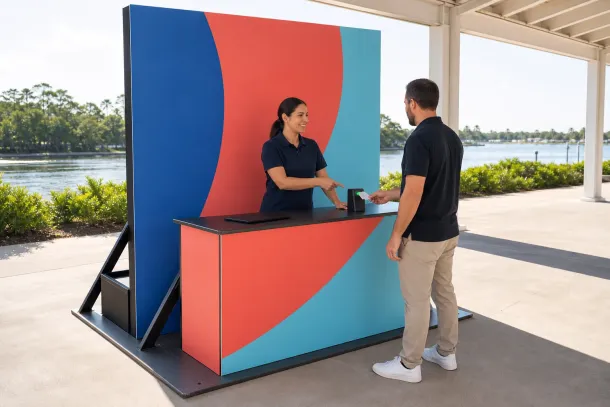
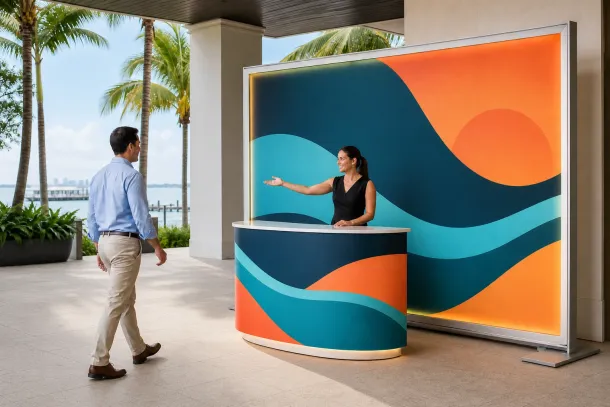
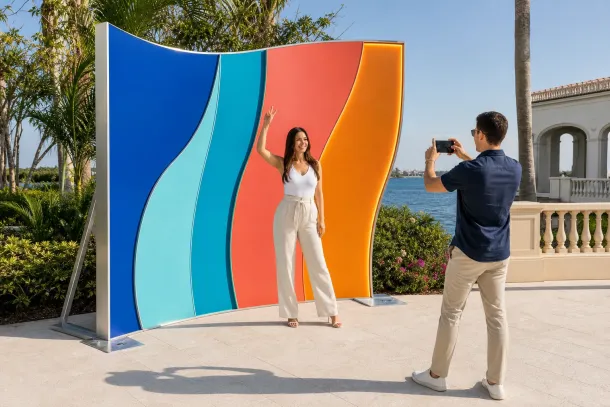
Sponsor content works best when it has a defined destination or role rather than occupying every available surface. A branded gate sequence, hospitality threshold, fan-photo location, product zone, or storytelling wall can create ownership while allowing the venue identity and fan movement to remain clear.
Establish which layers may change over time. A durable architectural frame can hold replaceable sponsor or campaign graphics, while core venue identity remains stable. That separation supports updates without requiring the entire environmental system to be rebuilt for every program.
How Can THRILLFORGE Support Environmental Graphics?
THRILLFORGE can help connect visual direction to fabricated and applied graphic elements, develop coordinated sign and scenic details, and plan the work around the supplied venue survey, access, schedule, and approval requirements. The service is suited to event and sponsor teams that need design intent translated into physical scale and install-ready information.
Share architectural drawings or surveys, current photos, target zones, content hierarchy, brand files, sponsor terms, intended duration, access restrictions, maintenance expectations, budget range, and approval contacts. That brief allows the team to distinguish custom fabrication, applied graphics, existing-structure coordination, and specialist work before pricing.
Stadium Environmental Graphics FAQs
- How are environmental graphics different from game-day signs?
Environmental graphics shape zones and architectural character, while game-day signs usually communicate temporary directions, schedules, queues, or destinations. A venue may need both systems.
- Is a site survey necessary?
Yes. Surface dimensions, condition, obstructions, edges, lighting, sightlines, access, and existing information affect artwork, materials, fabrication, and installation.
- Can sponsor graphics be replaced without rebuilding the frame?
They can when the system intentionally separates reusable physical elements from approved replaceable graphic layers.
- Who approves attachment to stadium surfaces?
The venue and any required qualified technical or facilities reviewer should approve the proposed method for the substrate, location, duration, access, and applicable site requirements.
THRILLFORGE — FORGING LEGENDARY EXPERIENCES.