
Branded Event Installations in Florida for Lead Gen
A lead-generation installation should make one valuable action easy to understand and comfortable to complete. For marketers planning branded event installations in Florida, the build is the physical interface between attention and follow-up. THRILLFORGE can help plan that interface around the offer, guest path, staff conversation, data-capture method, handoff, and site conditions.
Quick answer: Define the qualified next step before designing the installation. Then build a clear sequence—attract, explain, interact, capture permission where applicable, deliver value, and exit—supported by the staff, technology, and venue partners responsible for each part.
- Choose one primary guest action and one clear reason to complete it.
- Give hosts room to qualify interest without blocking the approach or queue.
- Connect the physical handoff to the client’s approved capture and follow-up process.
What Counts as a Useful Lead-Generation Installation?
The installation should serve a defined audience and offer. That may mean requesting a consultation, joining an approved product demo, reserving an appointment, receiving a sample, or opting into follow-up through the client’s chosen system. The physical design cannot decide what makes a lead qualified; the marketing and sales team must define that before fabrication.
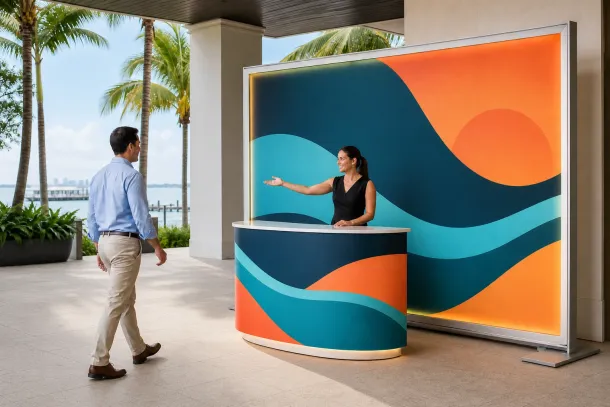
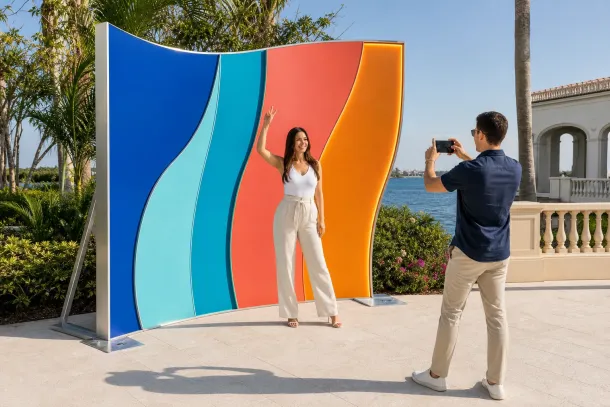
Avoid creating an elaborate attraction with no connection to the next business step. A photo moment can open a conversation, and a product interaction can demonstrate value, but the host still needs a clear transition. Write that transition into the experience map so signage, counter placement, devices, storage, and staffing support it.
How Do You Map the Physical Funnel?
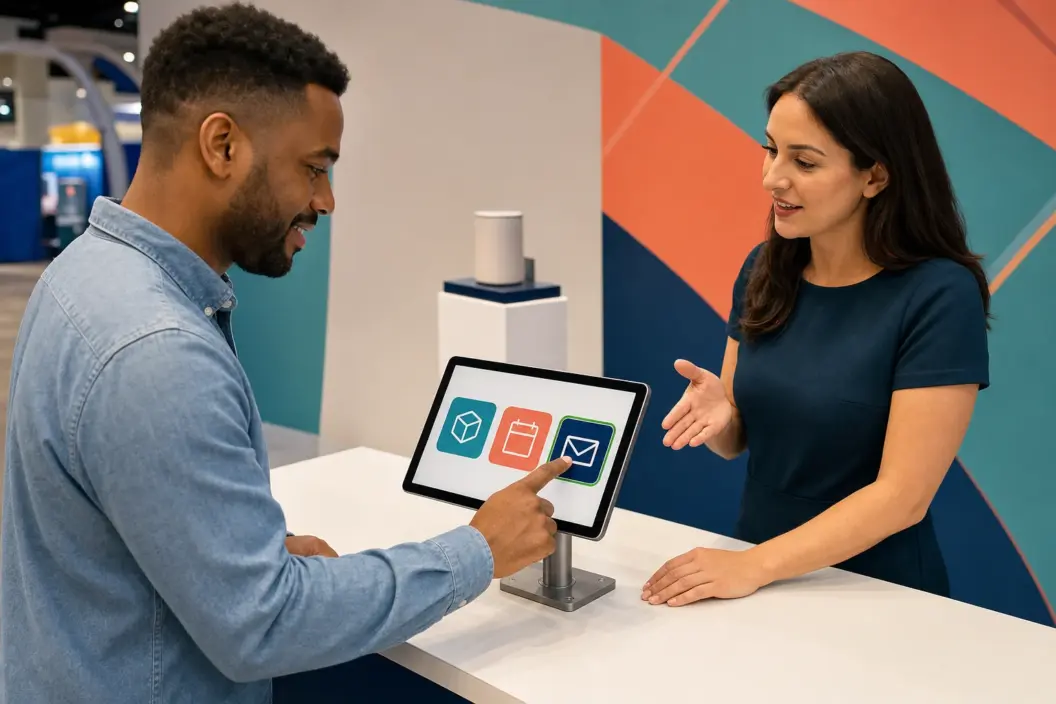
Draw six zones: approach, invitation, interaction, conversation, capture or handoff, and exit. Note what the guest sees, what the host does, what equipment is used, and how long the step is expected to take. This makes it easier to identify where people may hesitate, where a queue could form, or where staff need private storage and device access.
The footprint should also handle guests who decline. A clear bypass and exit protects circulation and keeps the experience welcoming. Lead generation is stronger when participation feels intentional, not when the layout traps passersby or hides the nature of the request.
Conversion note: Write the host’s opening question and the guest’s next step before finalizing counter orientation. The conversation geometry should support the actual exchange.
What Should Be Decided About Data and Technology?
The client and its selected platform provider should define what information is collected, the reason for collection, consent language, device workflow, connectivity, access, retention, and follow-up. Fabrication can provide a stable device position, privacy-aware screen orientation, cable management, staff access, and a comfortable place to complete the interaction.
Plan a usable fallback with the responsible technology and operations teams. If connectivity or a device is unavailable, staff need an approved response that does not create a misleading promise or insecure workaround. The physical environment should allow equipment to be serviced without dismantling the guest experience.
How Should Success Be Measured?
Choose measures the client can actually observe: approaches, completed interactions, approved opt-ins, appointments requested, samples distributed, qualified conversations, or downstream actions recorded in the client’s systems. Define who owns each count and how staff will record it before the program begins.
Physical design can support cleaner observation through defined entries, service positions, handoff points, and queue zones. It cannot by itself prove sales impact or lead quality. Those conclusions require the client’s follow-up data and an agreed method for connecting event activity to later outcomes.
How Can THRILLFORGE Support the Installation?
THRILLFORGE can help turn the campaign and guest-flow brief into a branded physical environment, coordinate fabrication details, and plan host, storage, device, signage, and interaction zones around the supplied site information. Specialist data, software, network, legal, or promotional providers remain responsible for their respective systems and requirements.
Bring the target audience, offer, desired action, qualification logic, host script, device or platform details, site plan, venue rules, staffing, event hours, brand assets, budget range, and measurement plan. That creates a scope grounded in the buyer journey instead of a generic “engagement” objective.
Lead-Generation Installation FAQs
- Does every installation need a digital form?
No. The appropriate next step depends on the offer and client process. An appointment request, product demonstration, qualified conversation, or other approved handoff may be more useful.
- Who is responsible for consent and data handling?
The client and its selected legal, marketing, and platform providers should define and approve the collection and follow-up process. Fabrication should accommodate that approved workflow.
- How much space should hosts receive?
Size the host area from the expected interaction, number of staff, devices, storage, accessibility, queue, and venue circulation rather than using a decorative counter as the starting point.
- Can the installation be reused for another offer?
It can when graphics, device positions, storage, counters, and guest-flow components are intentionally designed to adapt to the known future use cases.
THRILLFORGE — FORGING LEGENDARY EXPERIENCES.