
Custom Event Carts in Florida for Sampling and Retail
A custom event cart is a compact service system built around one clear job. It may support sampling, check-in, gifting, merchandise, concierge service, product demonstration, or mobile hospitality. For Florida events, the cart also needs practical movement, storage, work surfaces, cleaning access, brand visibility, and site-appropriate materials.
Quick answer: Define what staff must do, what they must store, how guests approach, and where the cart will move. Those answers determine dimensions, counter height, openings, casters, graphics, utilities, shade, and finish—not the other way around.
- Specify the service task, staff sequence, and guest handoff first.
- List every stored item, utility, access door, and cleaning need.
- Match mobility, finishes, and weather planning to the actual venue surface.
What Job Should the Cart Perform?
A sampling cart needs a clear product handoff and replenishment route. A registration cart needs devices, power, credentials, and guest-facing privacy. A retail cart needs merchandise display, stock access, checkout equipment, and a secure closeout plan. Trying to make one cart perform every function usually produces a compromised work surface.
Write the operating sequence before drawing the form: where staff begins, what they reach for, what the guest sees, how the item is delivered, and where waste or returned materials go. This exposes missing space and keeps decorative features from blocking the work.
Which Details Determine Whether Staff Can Use It?
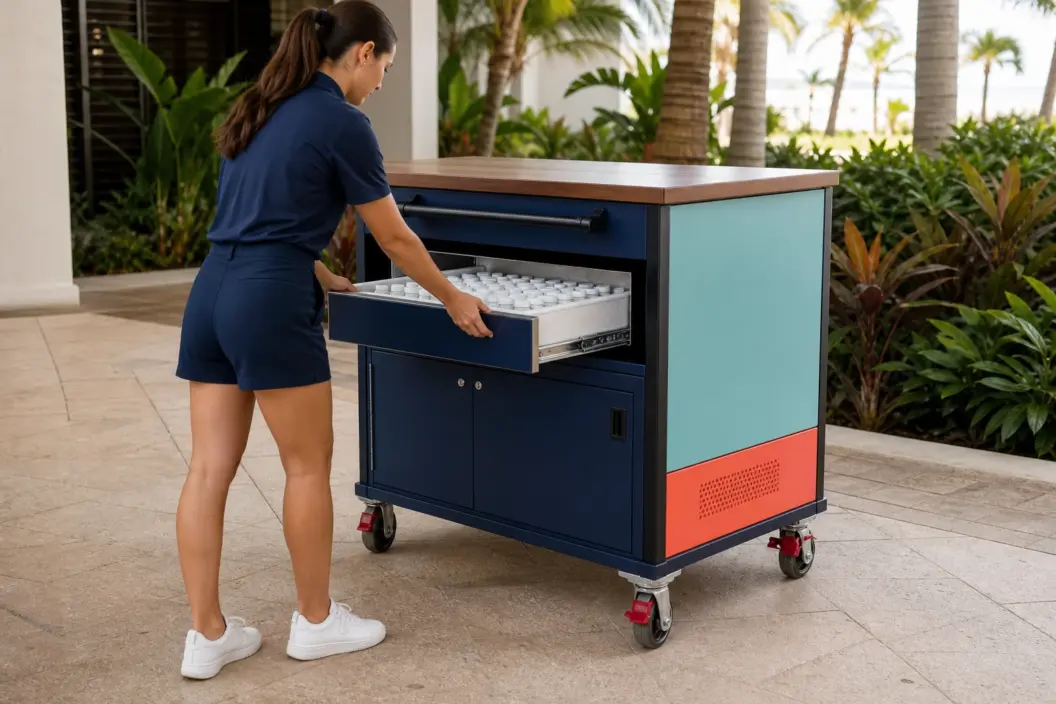
Confirm the number of staff, working side, counter heights, equipment dimensions, cable routes, doors, shelves, ventilation needs, locks, handles, and the heaviest stored items. If food, beverage, payment, power, or regulated products are involved, the operator and venue should identify the applicable requirements before the design is finalized.
Mobility is more than adding wheels. Caster type, wheel diameter, locks, thresholds, carpet, pavers, grass, ramps, cart weight, turning clearance, and who is permitted to move it all matter. A cart intended to stay fixed for the event may require a different base and restraint plan than one that changes locations during service.
Planning check: Mock the work surface with boxes and tape, then have the intended staff complete the service sequence. Small ergonomic problems are cheaper to correct before fabrication.
How Does a Branded Cart Support Guest Interaction?
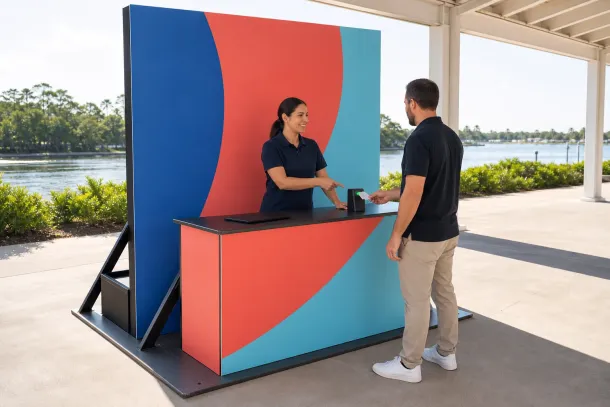
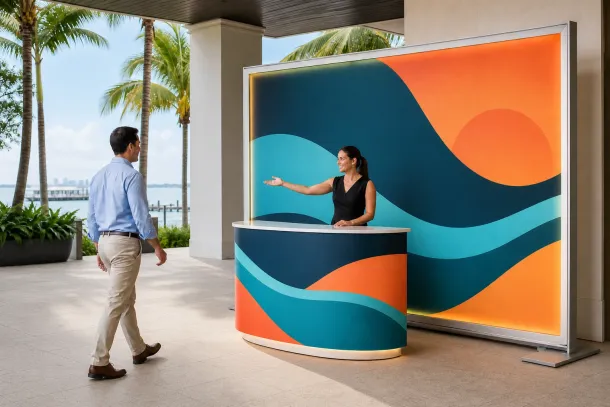
The cart should signal its purpose from the guest approach. A clear product presentation, open service edge, visible menu or instruction, and uncluttered counter reduce hesitation. Branding belongs where it remains visible during use, not where staff, products, bins, or guests will cover it.
Think about the moment after the handoff as well. If the program asks for a scan, conversation, purchase, or photo, provide room for that step without blocking the next guest. The cart can anchor the interaction, but the surrounding footprint still determines queueing and dwell.
What Changes for Florida Indoor and Outdoor Use?
Indoor settings may favor quiet casters, protected floors, compact maneuvering, and finished views from several sides. Outdoor settings add sun, sudden rain, wind exposure, uneven surfaces, landscape moisture, and temperature effects on products and equipment. The event operator must define when the cart may remain outside and the procedure if conditions change.
Select finishes and removable graphics for the expected exposure and cleaning method. Shade can improve staff and guest comfort, but any attached canopy or overhead element changes wind and stability considerations and should be reviewed for the exact site rather than treated as a decorative accessory.
When Is a Custom Cart Better Than a Standard Counter?
A custom cart earns its place when mobility, a specific product, repeated service, storage, equipment integration, or a distinctive brand form matters. A standard counter may be more efficient when the need is stationary, short-term, visually simple, and already served by available rental inventory.
THRILLFORGE can help convert the operating brief into a fabrication scope and identify which elements should remain interchangeable. Bring the service sequence, product and equipment dimensions, venue surfaces, branding, movement plan, and intended reuse to the first conversation.
Frequently Asked Questions
- What details are needed to size an event cart?
List staff positions, products, equipment, storage, utilities, service direction, guest handoff, venue surfaces, doorways, transport limits, and any applicable operating requirements.
- Can a cart move while fully stocked?
That depends on weight, contents, center of gravity, casters, surface, thresholds, and the operator’s handling plan. Define the intended loaded movement before design.
- Can the branding be changed for another campaign?
It can when replaceable panels or graphic zones are designed into the base. The underlying color, form, and hardware should also suit the expected future uses.
- Can an event cart include power or equipment?
Equipment can be planned into the design when specifications, ventilation, access, cable management, power source, venue rules, and qualified electrical responsibilities are confirmed.
THRILLFORGE — FORGING LEGENDARY EXPERIENCES.