
Responsible AI for Event Workflows
AI can support selected event-planning and creative tasks when it improves a defined decision and remains subject to human review. At THRILLFORGE, the durable question is not whether a project can use AI. It is whether the use case protects facts, confidential information, intellectual property, approvals, physical realism, and accountability while producing something useful for the team or client.
Quick answer: Use AI for bounded assistance such as organizing inputs, comparing options, exploring early concepts, or preparing drafts. Do not treat generated output as verified fact, final engineering, approved artwork, legal guidance, safety direction, or proof of a completed event.
- Define the task, approved inputs, reviewer, and decision before using AI.
- Keep sensitive material out of unapproved tools and workflows.
- Verify facts, rights, physical logic, and final outputs with responsible people.
Where Can AI Be Useful in Event Work?
Potential uses include summarizing an approved brief, organizing venue questions, comparing guest-journey options, drafting checklists, exploring early visual directions, producing internal copy alternatives, categorizing feedback, or identifying missing information. These tasks can help a team see choices sooner, but the quality still depends on the inputs and the person reviewing the result.
A useful AI task has a narrow outcome and a test. For example: extract every unresolved venue dependency from this approved brief, then have the project lead compare the list with the source. “Make the event amazing” has no measurable standard and invites generic output. Clear prompts do not remove the need for verification.

What Should Remain a Human or Qualified Decision?
People remain responsible for the creative direction, client relationship, factual claims, brand approval, privacy choices, procurement, fabrication release, venue coordination, and on-site operation. Engineering, code, legal, accessibility, electrical, structural, rigging, weather, and life-safety decisions belong with the appropriate qualified professionals and authorities, not a generated answer.
AI can suggest questions or organize supplied information, but it may omit conditions, invent sources, misunderstand drawings, or state uncertainty too confidently. A plausible paragraph is not evidence. Review against the original documents, the current site, authoritative requirements, and the person who owns the decision.
How Should AI-Generated Event Images Be Reviewed?
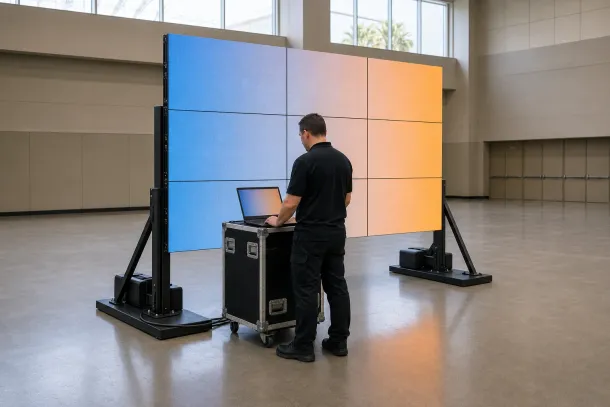
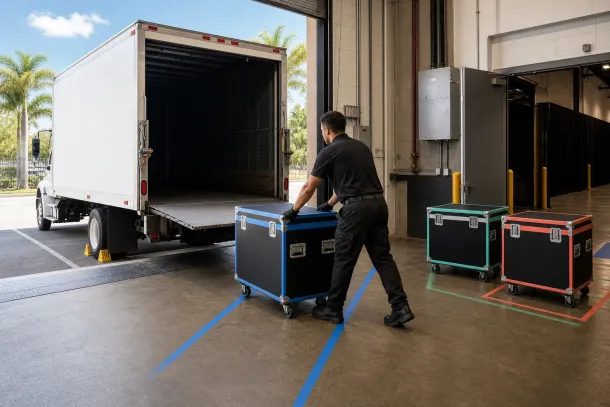
Concept images should be labeled and treated as visual exploration, not as photographs of THRILLFORGE work or promises of an exact deliverable. Inspect human anatomy, tools, structures, attachments, furniture, vehicles, weather, flooring, lighting, signage, brand marks, and the relationship between every object. If the activity or construction would not make sense in real life, the image should not pass review.
Keep the composition simple enough to verify. A useful concept should fit the article, Florida setting, audience, event use, and intended mood while remaining positive and believable. Any apparent client, venue, product, uniform, logo, or trade dress needs rights and context review. Final design still requires real dimensions, materials, technical input, and approval.
What Governance Questions Should a Client Ask?
Ask which task uses AI, which tool or provider is involved, what information enters it, whether that information is confidential or personal, who can access outputs, how long data may be retained, and who reviews the result. Confirm ownership and usage rights for supplied and generated material before anything becomes client-facing or enters production.
The project should also define disclosure where relevant, version control, source attribution, approval status, and a manual path if the tool is unavailable or unsuitable. No AI step should quietly change the agreed scope, publish content, contact people, spend money, or make a production decision without the authorized human process.
How Can THRILLFORGE Use AI Responsibly?
THRILLFORGE may use AI as an optional support tool when it fits the task, approved workflow, and client requirements. The value should come from clearer choices or more efficient preparation, not from replacing accountable judgment or presenting generated material as proven work. The exact workflow can be discussed and limited for a project.
Buyers should bring the event objective, audience, approved source materials, brand rules, privacy constraints, required deliverables, and review owners. The relevant Services remain creative, fabrication, production, and management work; AI is not a separate guarantee of quality, speed, savings, or results.
Frequently Asked Questions
- Does THRILLFORGE use AI on every project?
No. AI should be used only when it fits a defined task, the approved workflow, and the project’s privacy, ownership, brand, and review requirements.
- Can confidential event information be entered into an AI tool?
Do not submit confidential, personal, proprietary, or restricted material unless the client has approved the exact tool, purpose, data handling, access, retention, and responsible workflow.
- Can an AI concept image be used as a fabrication drawing?
No. A concept image can communicate direction, but fabrication requires verified dimensions, materials, connections, site conditions, technical information, and approvals from the responsible parties.
- How do we judge whether an AI step adds value?
Define the expected decision, time or clarity benefit, acceptable inputs, reviewer, error checks, and fallback. Remove the step if it adds risk or complexity without improving the approved outcome.