
Experiential Event Design in Florida
Experiential event design in Florida begins by defining what guests should understand, feel, and do—not by selecting decor in isolation. The design becomes useful when a clear audience objective is translated into arrival, orientation, participation, hospitality, content, and departure moments that can be produced within the real venue, schedule, budget parameters, and operating constraints.
Quick answer: Build the experience around one primary guest action and a small set of supporting moments. Map the journey, identify the evidence each moment needs, and test every creative choice against brand clarity, physical usability, production feasibility, and the site’s actual conditions.
- Write the guest objective before defining the visual language.
- Design the complete sequence, including waiting and staff interactions.
- Give production teams decisions they can measure and execute.
What Should Guests Understand, Feel, and Do?
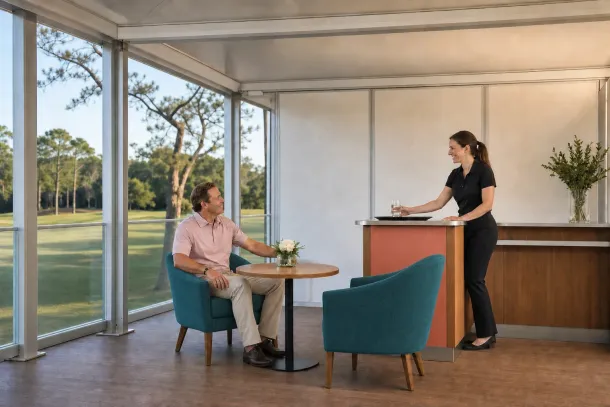
Start with audience and purpose. A product introduction may ask guests to compare or try something. A corporate gathering may need people to connect, learn, or recognize a milestone. A hospitality environment may need to welcome, orient, and host without slowing circulation. Describe the desired action in observable language rather than relying on broad words such as immersive, elevated, or memorable.
Then identify the message and proof. What must a guest see, hear, handle, learn, or receive to complete the intended action? Which moment carries the brand promise, and which moments simply support comfort or flow? The environment can encourage attention and participation, but design alone cannot guarantee dwell time, leads, sentiment, sales, or any other business outcome.
How Does the Journey Become a Spatial Plan?
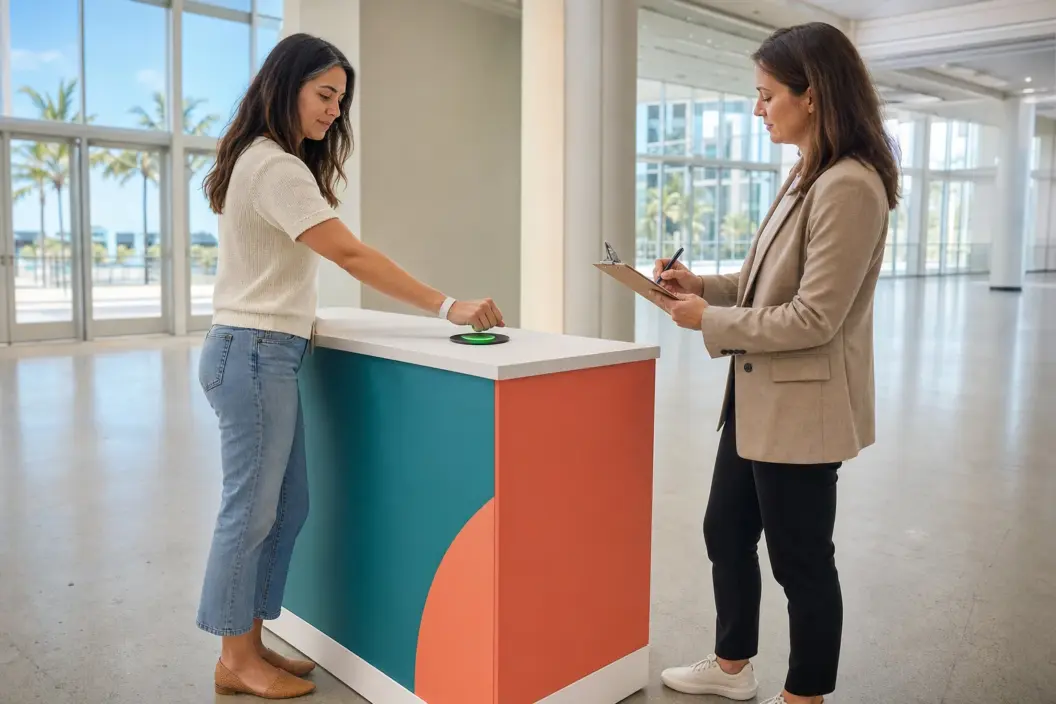
Map the experience from the guest’s point of view: approach, recognition, entry, greeting, orientation, wait, primary interaction, secondary content, hospitality, exit, and follow-up. Include staff, performers, presenters, sponsors, vendors, accessibility needs, and anyone moving equipment or replenishing materials. A strong diagram reveals where messages compete, lines cross, or a visually attractive feature interrupts the activity it is meant to support.
Give each zone a purpose, capacity assumption, operating owner, dwell expectation, content need, and fallback. Consider what guests can understand without a staff explanation and where human guidance adds value. The plan should also respect emergency routes, venue circulation, service paths, sound spill, sightlines, privacy, and the difference between a photo composition and a space people can actually use.
What Belongs in an Experiential Design Package?
A practical package connects narrative to decisions. It may include the audience and objective, journey map, spatial plan, mood and material direction, key views, graphic hierarchy, interaction descriptions, lighting intent, content surfaces, furniture and decor direction, technology interfaces, staff touchpoints, and a list of assumptions. Label what is conceptual and what is approved for production.
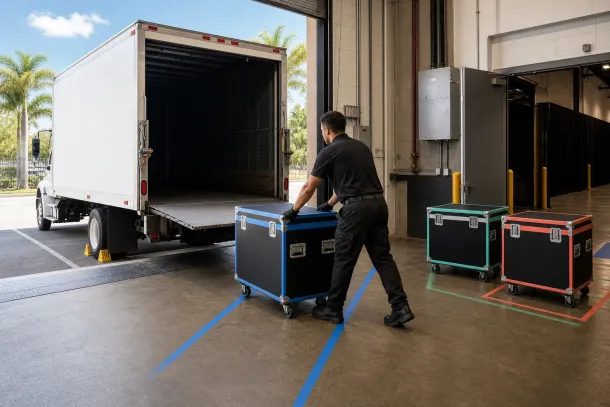
Define the handoff to fabrication, A/V, graphics, digital, catering, talent, venue operations, and other providers. Dimensions, brand files, content ownership, technical criteria, power or data needs, cleaning, replenishment, and change control should have named owners. Qualified professionals and venue authorities must review requirements within their responsibility; an experiential concept does not replace engineering, code, accessibility, electrical, fire, or other required review.
How Do Florida Settings Change the Creative Direction?
Florida experiences may occupy a hotel ballroom, convention center, resort lawn, waterfront terrace, retail setting, public space, arena, or temporary outdoor footprint. Arrival patterns, local traffic, freight access, guest dress, daylight, heat, rain, wind, humidity, and nearby water can alter materials, shade, queue comfort, screen visibility, sound, and the amount of human guidance required.
Design alternate states instead of treating weather as a late production note. Decide what moves, closes, drains, receives protection, or shifts indoors; who authorizes the change; how guests are informed; and which experience remains worthwhile after the change. The correct response depends on the venue, event, authorities, and responsible specialists. Florida character should emerge from the real audience and place, not from adding decorative clichés.
Where Can THRILLFORGE Support the Design?
THRILLFORGE may support an experiential brief where brand storytelling, guest flow, scenic or branded environments, fabrication, and event production need to be considered together. The exact engagement should identify which design stages, drawings, content decisions, fabrication packages, technical coordination, installation, or on-site support are included.
Bring the audience, desired action, event format, Florida location, dates, brand standards, current content, venue information, budget parameters, known vendors, and approval team. Explore relevant Services, then convert the selected support into written deliverables, owners, assumptions, and review points rather than treating a broad creative direction as a complete scope.
Frequently Asked Questions
- What is the difference between event decor and experiential design?
Decor shapes appearance and atmosphere. Experiential design also connects space, sequence, content, staff, interaction, and operations to a defined audience objective. A project may need either one or both.
- How early should the venue enter the design process?
Before important spatial or technical assumptions become fixed. Venue access, rules, utilities, capacities, weather options, circulation, and approval requirements can materially change the concept and its production path.
- Can one concept travel across several Florida cities?
A repeatable system can help, but each stop still needs a site-specific review. Footprint, freight, utilities, climate exposure, labor, audience behavior, permits, venue rules, and available operating time may differ.
- How should an experiential concept be evaluated?
Review brand clarity, guest comprehension, usability, accessibility, production feasibility, staffing, site fit, fallback behavior, content readiness, and agreed measures tied to the objective. Visual novelty is only one input.